National and regional services in the criminal justice
system utilizing a social model approach for community building in collaboration
with policy makers and other leaders in the correctional community. Developer
of the COMMUNITY MODEL program in American jails.
NEWS
- SAVE the DATE Tuesday June 25th, 2008
One Day Community Model Introduction in Richmond, Virginia
with CFTJ founding member Penny
Patton -- More
Info
- CFTJ CM Document Available (formerly called CFTJ Correctional
Community Recovery-CCR)
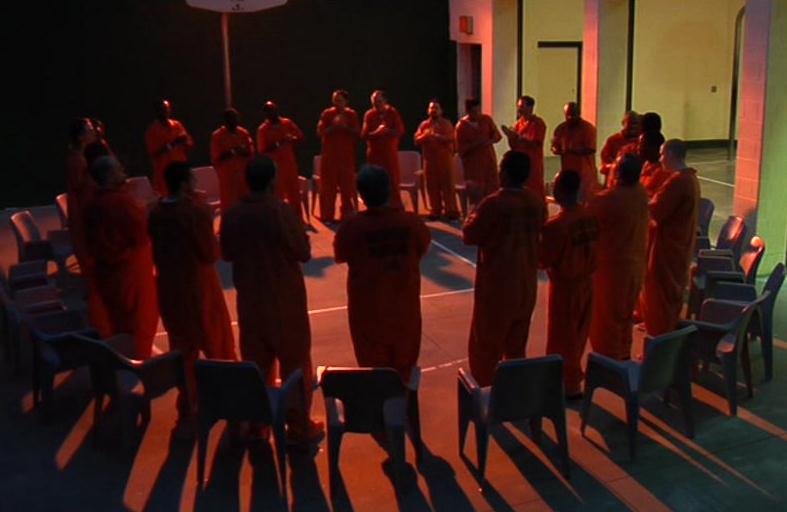
CFTJ Community Model (CM) represents a shift in a correctional
environment that can readily be provided by a facility's administration.
The resulting cultural change, experienced by the participants and staff
alike, promotes the best values of our society inside the institution.
Additionally, it provides the best chance for the replication of pro-social
skills in the "free-world" community leading to a NEW-ENTRY
lifestyle in harmony with the recovery support network most available
in society. Rewards for administrators and policy makers are significant
because citizens are ready to see an improved return on their correctional
investment.
- NEW-Entry Preparation from Day 1
34 page NEW (New - Entry Workbook) for all jails or prisons and probation
and parole. Individualized for the institution or agency. Can be used
alone and sold in canteen or used in existing programs. Developed by
CFTJ to address forensic, substance abuse, social, and life skill problems,
needs, and solutions. Does not require staff involvement. Workbook is
always
REVIEW: Sample cover, Table of Contents, and sample
page and contact CFTJ to make this
a match for your jail or prison today. Contact CFTJ directly to make
arrangements or for further information.
|
What
is Therapeutic Justice
"…one nation...justice for all…" says the Pledge
of Allegiance of the United States of America. That promise and the fact
that things change over time, make therapeutic justice a practical way
to guarantee the rights of all citizens today. Therapeutic Justice means
that any involvement, and all contact with the criminal justice system,
would offer an opportunity for education, healing, and restoration for
the victim, the offender, the community, and the criminal justice system
staff.
Therefore, Therapeutic Justice means working together to increase respect,
usefulness, and safety in an area of human experience that has all too
often been characterized by pain, neglect, and frustration. In 3,000 years
of western history, we have never gotten safe by being tough (James Gilligan,
Harvard Researcher).
Therapeutic Justice means communities reassume the responsibility for
satisfying justice and correctional systems become known as human service
centers.
The Center for Therapeutic Justice is committed to solutions that come
from making policy decisions that offer changes that reduce misery and
crime and increase safety and cost savings.
|